
Eight articles of impeachment. A leadership purge. A Department of War obsessed with looking tough. And serious questions about accountability when American military power crosses the line.
I’ve been critical of Pete Hegseth since the beginning. That’s no secret. I didn’t think he was qualified to lead the Pentagon, and his tenure hasn’t convinced me otherwise.
But I’ve also said I don’t want Congress spending the next two years impeaching everyone Republicans like just because Democrats get the chance. I’ve watched enough of that partisan bullshit.
Accountability isn’t retaliation. And Hegseth presents a serious question about the difference.
On November 9, Republican Rep. Thomas Massie introduced eight articles of impeachment. On November 10, the House voted 211–204 to refer the resolution to Judiciary, with 18 members not voting. That wasn’t a vote to impeach or a finding of guilt. It prevented an immediate floor decision.
I went through the allegations, the testimony, the legal defenses, and the evidence. Before we get to the eight articles, though, we need to talk about the man running the Pentagon.
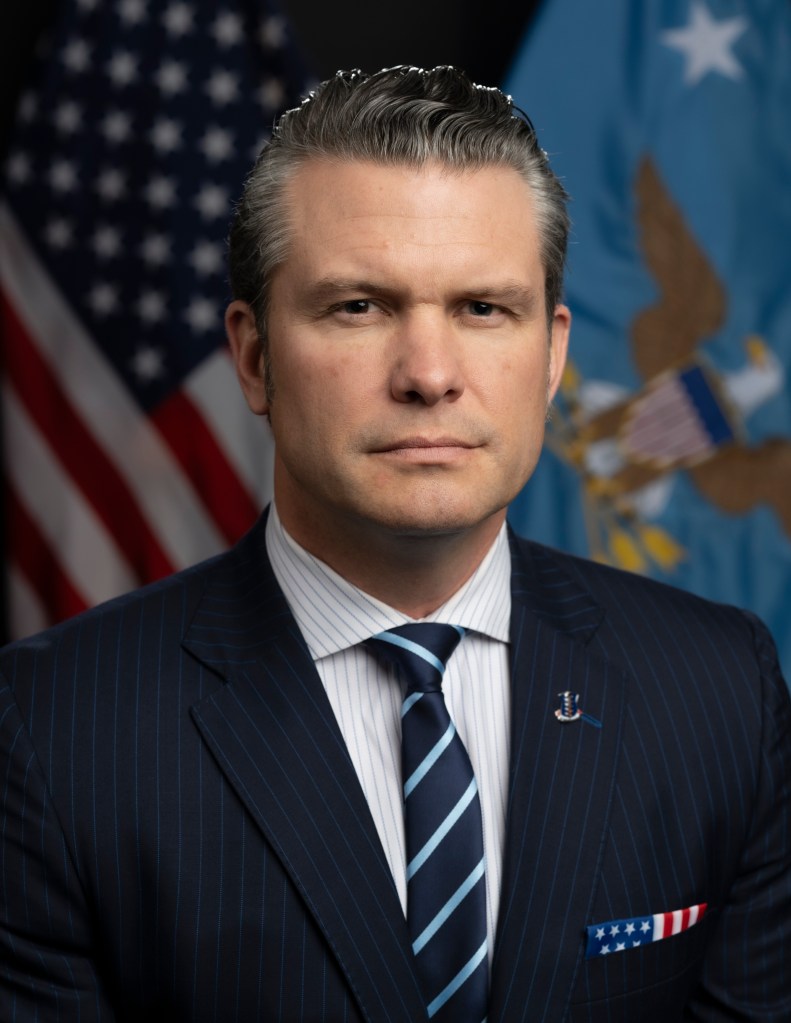
The military wasn’t broken because it had fat guys and trans people
At Quantico in September 2025, Hegseth gathered senior commanders and spent a remarkable amount of time talking about physical appearance, beards, diversity programs and transgender troops. He portrayed the military he inherited as an institution weakened by political correctness.
I’m a Marine. I believe in standards. Fitness, discipline, professionalism and combat readiness matter. You won’t hear me arguing otherwise.
But there’s a difference between enforcing standards and putting on a performance about standards.
The American military didn’t forget how to fight because someone grew a beard or a transgender American wore the uniform. A general’s value isn’t measured exclusively by how impressive he looks next to a flag.
You don’t restore professionalism by turning the military into a political punchline.
There’s a big difference between being a hard-ass and being a good leader.
You can’t fire your way to competence
General Charles Q. Brown Jr. Admiral Lisa Franchetti. General James Slife. Senior military lawyers. The departures accumulated quickly.
By September 2026, CBS News had documented at least 20 senior military and civilian defense leaders who had been fired, forced out, resigned or otherwise departed during Hegseth’s tenure. Not all were personally fired by him. Not every departure was necessarily unjustified.
The president has authority to choose advisers he trusts. And stars on somebody’s shoulders don’t entitle them to a lifetime appointment.
But when that much experience leaves an institution in such a short period, the secretary owes the country an explanation of how those changes improve military readiness.
These aren’t interchangeable television personalities. They carry decades of operational experience and institutional knowledge. Especially troubling is the removal of senior legal advisers during a period when the legal basis for military operations has become so fiercely contested.
Firing people is not, by itself, evidence of leadership.
The Department of War. Until somebody calls it war.
The administration went full send on the Department of War branding. In September 2025, Trump authorized Department of War and Secretary of War as secondary titles. Congress did not permanently change the department’s statutory name: legally, it remains the Department of Defense.
Hegseth embraced the language of warriors, lethality and fighting wars. It became part of his public identity.
Then the administration launched major operations against Iran, and suddenly officials were arguing about whether hostilities had legally ended, whether a ceasefire stopped the War Powers clock, and what congressional authorization was required.
To be fair, the ordinary meaning of war and the statutory meaning of hostilities aren’t identical. A ceasefire can matter legally. That’s a real argument, not merely wordplay.
But the public messaging is still astonishing.
You don’t get to make warfighting your entire political brand and then treat questions about the legal consequences of war as an unreasonable inconvenience.
A tougher-looking sign on the building doesn’t change the Constitution.
Articles I–III: Iran and the Constitution
The United States began major military operations against Iran on February 28, 2026, without specific congressional authorization for that campaign. The administration argues the president possessed independent constitutional authority. Massie disputes that authority given the operation’s scale. It’s a serious constitutional disagreement, not an issue resolved by repeating a slogan about the commander in chief.
Article II alleges that Hegseth ignored a congressional withdrawal directive. But the concurrent-resolution mechanism has a major constitutional vulnerability: it bypasses presidential presentment. The implications of INS v. Chadha cannot simply be waved away.
Article III is more troubling. The War Powers Resolution generally requires termination of unauthorized hostilities after 60 days, subject to limited exceptions. At an April 30 Senate hearing, Sen. Tim Kaine pressed Hegseth on that deadline. Hegseth deferred to White House counsel and advanced the administration’s view that a ceasefire paused or stopped the clock.
The statute contains no express automatic ceasefire pause. Genuine termination of hostilities could change the analysis, but continued naval blockade operations and subsequent exchanges of fire complicate that argument.
We could not verify a publicly released legal memorandum explaining the administration’s ceasefire-clock theory. That doesn’t mean no such advice exists.
Congress should demand the legal analysis and the operational record. Article III has a strong factual foundation for an inquiry, though Hegseth’s personal legal culpability remains unproven.
Article IV: The school in Minab
On February 28, a school in Minab, Iran, was struck. A UN fact-finding mission cited credible independent information reporting 157 people killed, including 123 children. The mission found reasonable grounds to believe American forces carried out an attack constituting a war crime.
That is an exceptionally serious investigative finding. It is not a criminal conviction, and the figures should be attributed rather than presented as a final audited death toll.
American officials acknowledged evidence connecting a U.S. strike to the incident. Separately, the Defense Department’s inspector general documented deterioration in the Pentagon’s civilian-harm mitigation program. Reporting connected Hegseth to decisions about reducing those capabilities.
Congress requires civilian-protection functions under 10 U.S.C. §184. But the law doesn’t prescribe a single immutable staffing number, and the evidence we’ve reviewed does not establish that Hegseth’s cuts directly caused the Minab targeting failure.
Those distinctions matter. So does the underlying problem.
Target verification, legal review and civilian-harm mitigation aren’t politically correct decorations. They’re part of lawful warfare.
When they fail, people die. Sometimes children.

Article V: The maritime strikes
This one troubles me most as a veteran.
The administration used lethal military force against vessels suspected of drug trafficking. Drug trafficking is a serious problem, but criminal suspicion does not automatically make someone a lawful military target. A terrorist designation doesn’t automatically establish that every suspected member is a combatant.
After the September 2, 2025 initial strike, two survivors were reportedly clinging to wreckage. A follow-on strike killed them. The precise orders, the applicable legal theory, and what Hegseth personally knew remain disputed. Other operations raised questions about missing survivors and rescue responses.
The Pentagon insists the campaign was lawful. The complete underlying targeting record and legal opinions are not publicly available.
I served in combat. I know decisions are made quickly and with incomplete information. I also know the rules of armed conflict aren’t optional because the target is unpopular.
If somebody is helpless in the water and no longer fighting, that changes the legal and moral equation. Whether a particular attack was unlawful requires the facts, the applicable law and the orders. Congress should get them.
And there’s another thing that bothers me. The people at the bottom don’t invent the administration’s legal theories. They execute missions. When leaders get creative about the rules, it’s often the operators who pay the price.

Article VI: Senator Mark Kelly
Sen. Mark Kelly, a retired Navy captain, participated in a video reminding service members they must refuse unlawful orders. That isn’t a radical partisan invention. It’s a principle of military law.
Hegseth censured Kelly and initiated proceedings that could affect his retired military status. A federal judge issued a preliminary injunction blocking the actions. That’s significant judicial intervention, not a final verdict on the merits. We have not established the final appellate disposition.
A defense secretary should not use military disciplinary authority to intimidate a political critic for accurately describing the duty to refuse unlawful orders.
If Kelly’s message was misleading, challenge it publicly. Using the Pentagon’s disciplinary machinery is a different matter. Article VI has a strong foundation for investigation.
Related reporting: I previously examined the dispute in my May 11, 2026 Gun Loving Hippie Dad article, “The Curious Case of Senator Mark Kelly and Whiskey Pete Hegseth.” The original article’s public permalink still needs to be verified before a live link can be added.
Article VII: Venezuela
In January 2026, U.S. forces captured Nicolás Maduro and his wife in Venezuela and transported them to the United States for prosecution. Massie challenges the operation’s constitutionality and legality, and raises questions about oil.
Here the administration has a substantial contemporaneous defense: the Justice Department’s Office of Legal Counsel issued a December 23, 2025 opinion arguing that the president could authorize a limited operation to support Maduro’s capture.
That opinion isn’t the final word. A criminal indictment does not automatically authorize military intervention inside another sovereign country. Domestic constitutional authority and international legality are distinct questions.
But we cannot responsibly dismiss the legal analysis just because we disagree with its conclusion. And Trump’s later remarks about Venezuelan oil do not establish that taking oil was the operation’s original purpose.
Legitimate constitutional questions? Absolutely. Every allegation proven? No.
Article VIII: Yemen
The 2025 campaign against Houthi forces in Yemen involved extensive strikes and substantial reported civilian harm. Airwars documented at least 224 reported civilian deaths across at least 30 incidents during Operation Rough Rider. Those figures are independent monitoring estimates, not judicial findings that every death resulted from an unlawful attack.
The administration invoked threats to shipping and American forces. That provides a recognizable security and self-defense argument, though it doesn’t automatically justify every strike.
Questions remain about the initial authority, congressional notification and individual targeting decisions. The public War Powers reporting timeline raises issues, but classified reporting prevents a definitive conclusion from the public record alone.
The campaign lasted approximately 53 calendar days inclusive, so it did not present the same 60-day deadline issue as Iran.
Article VIII warrants scrutiny, not a predetermined verdict.
Accountability is not retaliation
If you’re a Republican who thinks every article is bullshit because Trump appointed Hegseth, you’re defending your team, not examining the Constitution.
If you’re a Democrat who assumes every allegation is true because you hate Trump and Hegseth, you’re doing the same damn thing.
I don’t want impeachment to become routine partisan revenge. I still believe that. But I also don’t want that concern used as an excuse to shield powerful officials from accountability.
The strongest public-record cases for further investigation are Articles III, V and VI: Iran’s War Powers deadline, the maritime strikes and treatment of survivors, and the disciplinary actions against Kelly. Article IV also raises extremely serious questions about civilian-protection safeguards and Minab.
That doesn’t mean the other articles are frivolous. It means some depend on contested constitutional interpretations or factual claims the public record doesn’t yet prove.
An inquiry exists to find out what happened, not to manufacture a predetermined outcome.
The people at the bottom deserve better
When I was a young Marine, I wasn’t thinking about the politics behind the missions we were given. I was thinking about the Marines beside me. The mission. Getting everybody through it.
I trusted that the people making decisions above us understood the responsibility they carried.
As I’ve gotten older, I’ve come to understand that responsibility more clearly.
A secretary of defense isn’t supposed to be the toughest-looking guy in the room. He’s not supposed to win a popularity contest or turn the military into a political brand.
He’s supposed to exercise sound judgment over an institution entrusted with extraordinary power. That means knowing when to fight, when not to fight, when to listen to experienced commanders and when to say no.
It means protecting American service members and recognizing that civilians on the receiving end of American military power are human beings too.
Hegseth seems very interested in being called Secretary of War.
Fine.
Then he needs to understand what that title means.
War isn’t a slogan. It isn’t a T-shirt. It isn’t a television segment. And it sure as hell isn’t a substitute for competence.
War is a responsibility measured in human lives.
The people making those decisions owe us more than swagger.
So, should Hegseth be impeached?
I believe the evidence justifies a serious impeachment inquiry. I do not believe the public record establishes every accusation in Massie’s resolution.
Those positions aren’t contradictory.
Investigate. Release what can lawfully be released. Confront the strongest defenses. Hold hearings. Put witnesses under oath.
If the evidence establishes impeachable misconduct, act on it. If it doesn’t, say so.
I have been critical of Hegseth from the beginning. His treatment of senior officers, politicized rhetoric and obsession with projecting toughness have done little to convince me he has the judgment the job demands.
But questionable leadership and impeachable misconduct aren’t automatically the same thing.
That’s why the evidence matters.
Because the last thing our military needs is another generation of service members discovering that the rules applied to them but not to the people giving the orders.
That’s not accountability.
And it’s sure as hell not leadership.
Sources and further reading
Massie’s impeachment resolution
CBS News: Pentagon leadership departures
White House Department of War executive order
Pentagon IG civilian harm evaluation




Leave a Reply