Refinery attacks, a call to replace Ukraine’s president, and a Nebraska Republican’s opposition reveal the larger bargain behind the promise of cheaper fuel.
By Christopher Moore | Moore 2 the Story
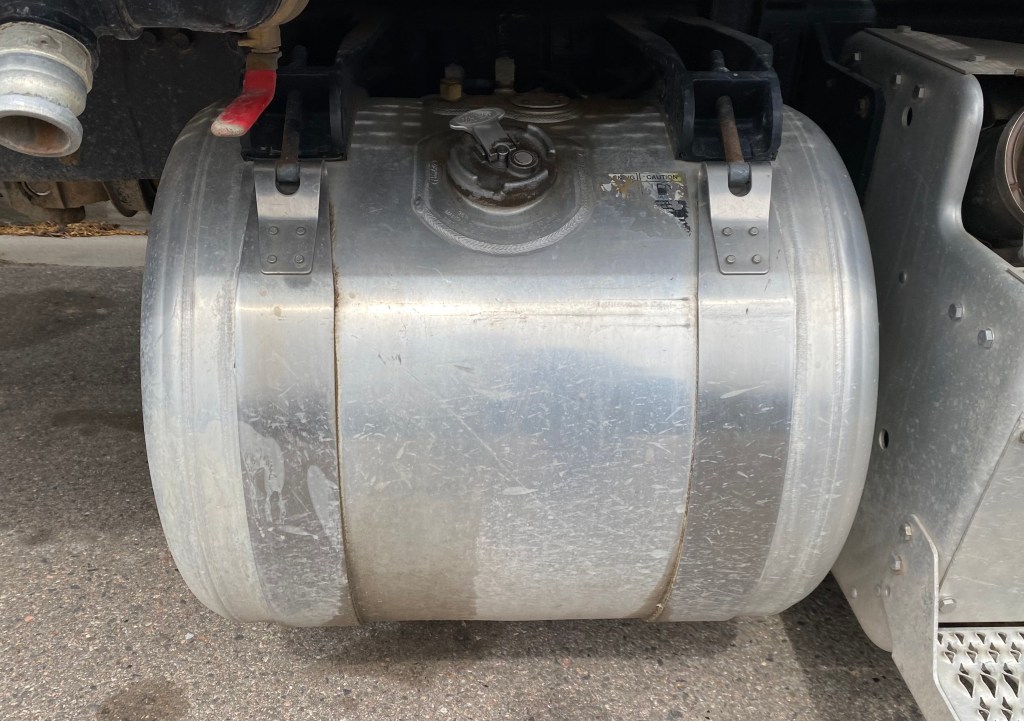
Featured image: diesel fuel tank on a Peterbilt truck, 2022. Theodoros0 / Wikimedia Commons (CC BY-SA 4.0).
Diesel has developed an impressive collection of R’s this week. And yes, the alliteration is intentional. The letter R is working overtime. Somebody has to.
Red dye. Russian supply. Refinery attacks. Relief. Republican resistance. And, somehow, replacing another country’s president.
That last one generally doesn’t appear on a fuel invoice. Usually, the surprise charge is a delivery fee.
I’m a diesel mechanic in Nebraska. Cheaper fuel matters to the people whose equipment I work on, the truckers moving their products, and the families buying what arrives on those trucks. During harvest, nobody needs a lecture about how important diesel is. They need enough of it, at a price that leaves something after the bills.
But when a fuel announcement becomes a sanctions reversal and a demand for different leadership in Ukraine, there is more to inspect than the price on the sign.
Red relief, with repayment in the paperwork
On October 5, Trump signed his diesel executive order at the Grand Island rally. The White House promoted it as opening highway use of tax-free red-dyed diesel.
Read the order itself, though. It directs Treasury to determine its authority to defer qualifying tax obligations, provide penalty relief, and issue implementing guidance. It separately directs the secretary to explore ways to eliminate the deferred liability, including legislation.
Deferral and forgiveness are different things. One moves a bill. The other removes it.
My mortgage company remains annoyingly committed to this distinction.
That distinction matters to someone deciding whether today’s savings could become tomorrow’s obligation. This is not an argument against relief. It is an argument for explaining exactly what relief means before people build a budget around it.
Nebraska’s separate agricultural relief runs from September 24 through December 23 and applies to qualifying transportation of Nebraska agricultural products. The state also makes clear that its dyed-diesel penalty relief does not itself waive federal penalties.

Sen. Pete Ricketts welcomed the red-diesel order as help for farmers and ranchers during harvest. That statement concerns the red-diesel measure. It should not be treated as his endorsement of the subsequent Russian agreement.
Russian relief, with deliveries still to prove
Four days later, the fuel story crossed an ocean.
Trump announced more than 300,000 tons of Russian diesel immediately, 500,000 in November, another million afterward, and a further three million dependent on refinery conditions. S&P Global reports that Moscow confirmed willingness to supply petroleum products but did not confirm Trump’s full 4.8-million-ton figure or delivery schedule.
Treasury’s General License 135 is more concrete. Through April 7, 2027, it authorizes covered Russian-origin diesel transactions, including imports into the United States and associated payment, shipping and insurance activity. It retains specified exclusions, including certain Iranian transactions and blocked-account debits.
The license contains no delivery schedule, tonnage cap, required discount for American customers, or requirement that the promised volumes arrive before the authorization takes effect.
Permission to trade is not proof of delivery. Nor does this document establish who is buying, what they are paying, or how much fuel will reach American customers rather than other markets.
Those are the receipts this story still needs.
In the shop, “the part is coming” and “the part is here” produce very different amounts of progress.
Refineries, retaliation and replacement
On October 10, Trump moved from fuel procurement to Ukrainian leadership.
“I think it’s time for Ukraine to get a new president,” he told reporters, according to Reuters. He blamed Ukrainian strikes on Russian refineries for hurting diesel supplies and demanded that those attacks stop.
That is a consequential escalation. A debate about helping American farmers now includes an American president calling for the replacement of the president of a country Russia invaded.
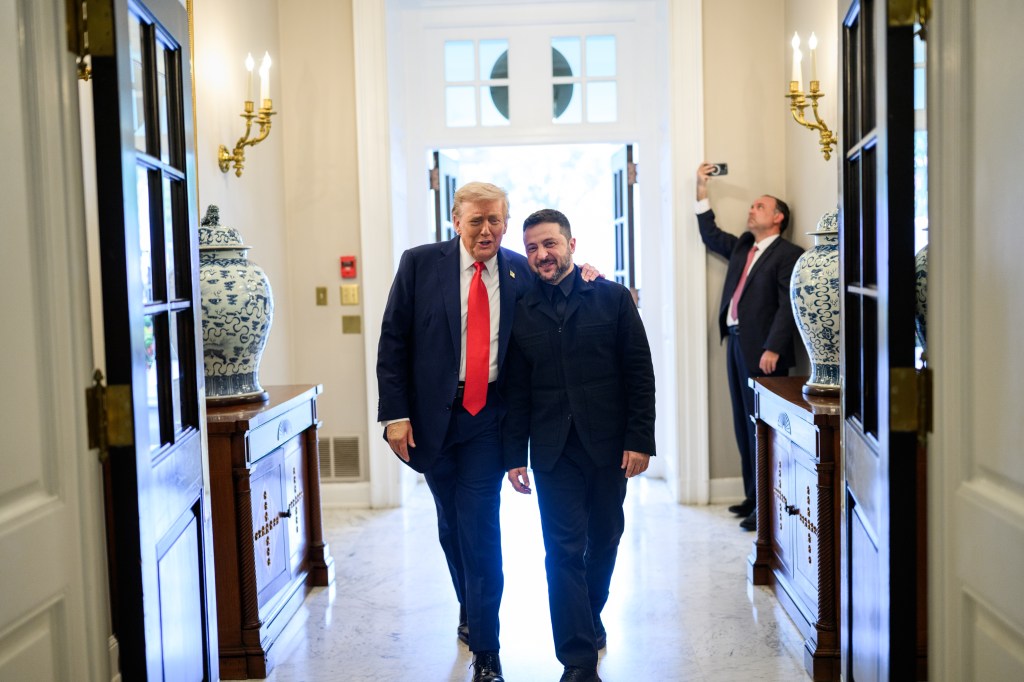
Ukraine’s answer deserves equal clarity. On October 11, Zelenskyy repeated his offer to halt attacks on Russian refineries if Russia stops attacking Ukrainian energy infrastructure, with real guarantees.
He is offering reciprocal restraint. Trump is demanding that Ukraine stop its attacks. Those are different proposals, with different consequences for the people expected to accept them.
The administration’s argument deserves a fair hearing: disruption of Russian refining can worsen fuel scarcity, and American consumers bear costs they did not choose. But identifying that economic effect does not settle the strategic question of what Ukraine should relinquish while defending itself.
There is also a difference between asking whether a military tactic affects fuel prices and blaming the invaded country’s president for an American fuel bill.
Cheaper diesel is a legitimate objective. The terms of pursuing it remain legitimate subjects for scrutiny.
Republican resistance, including Nebraska
The objections are not confined to Democrats or European officials.
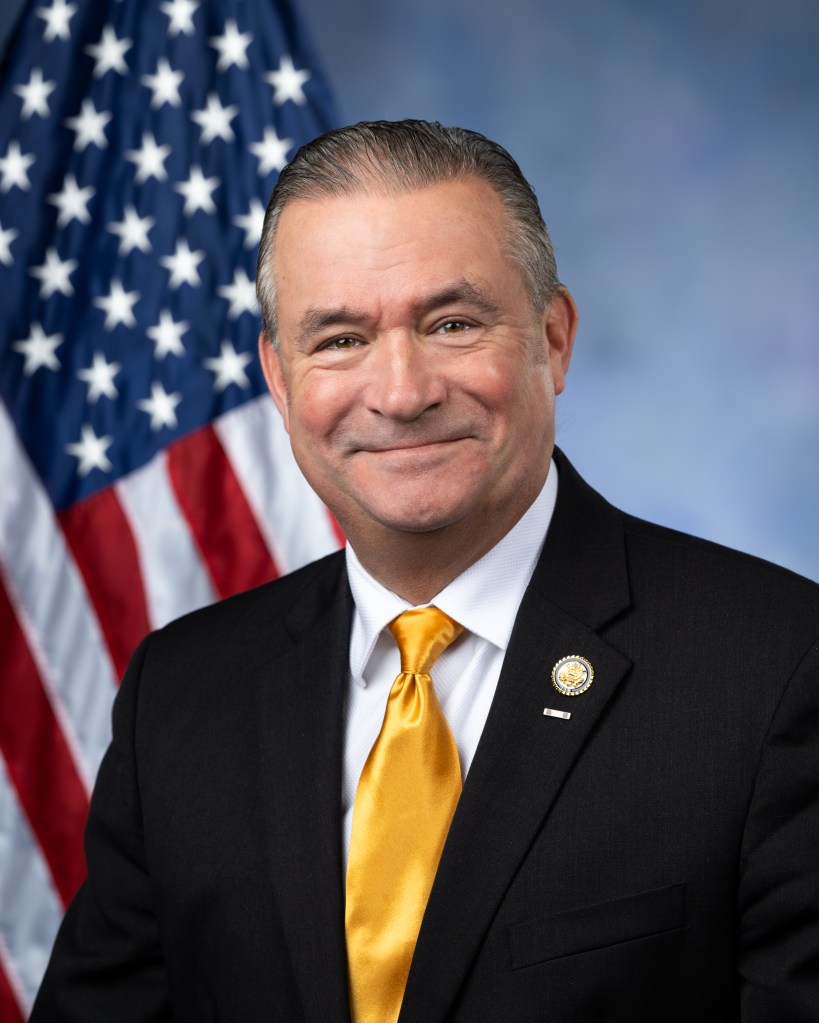
Nebraska Republican Rep. Don Bacon has criticized the sanctions reversal. His position follows his earlier work on bipartisan sanctions legislation, aimed at reducing the energy revenue supporting Russia’s war.
Radio Free Europe/Radio Liberty reports that Bacon agreed to co-sponsor legislation Pennsylvania Republican Brian Fitzpatrick plans to introduce to block Russian oil purchases. Fitzpatrick proposes forcing a House vote through a discharge petition, which requires 218 signatures. Texas Republican Michael McCaul and Alaska Republican Sen. Lisa Murkowski also oppose easing the pressure on Moscow.
That establishes Republican dissent. It does not establish that the proposal has passed, or that Nebraska’s entire delegation opposes the deal.
For Nebraska readers, Bacon’s objection creates a question worth answering without party shorthand: can a measure intended to help our agricultural economy also weaken a foreign-policy strategy its own supporters previously endorsed?
Calling both positions Republican does not resolve the disagreement. A party label is doing about as much diagnostic work here as a check-engine light.
You still have to find out what’s wrong.
Real shortages, realistic expectations
The shortage itself is not imaginary.
The Energy Information Administration reports that American refineries averaged 95% utilization in the third quarter. Distillate inventories were 13% below their five-year average in the week ending September 25. Disruptions abroad and high American exports contributed to tight domestic supplies.
That complicates the familiar instruction to simply produce more. Refineries are already running hard, and American fuel participates in an international market.
Additional Russian exports could help if they restore supply otherwise unavailable. Redirecting fuel from one existing buyer to another offers a different benefit. The agreement needs to be measured against that distinction, not just its announced total.
Timing matters, too. In its October 6 outlook, before the Russian deal was announced, EIA already forecast a gradual decline in diesel prices. It also cautioned that lower wholesale prices do not immediately translate into lower retail prices.
A falling pump price after October 9 would be welcome. By itself, it would not prove this agreement caused the decline.
Presidents are generally quicker to claim credit for the price sign than the fuel station is to change it.
Receipts before the victory lap
One tempting piece of supposed evidence already needs correction.
Reports identified MINERVA ZEN, a tanker that left St. Petersburg in September, as an approaching Russian diesel delivery. A publicly reproduced correction from Vortexa’s Claire Jungman identifies its cargo as UAN, a liquid fertilizer. The correction was accessible through a social-media mirror; the current cargo manifest was not independently obtained for this draft.
The ship should not be counted as a verified diesel delivery or proof of a secret September agreement. A vessel’s route is not a bill of lading.
The internet had apparently completed the unloading before anyone finished checking the cargo.
There is a separate, better-supported timeline lead: Reuters reports that Putin’s envoy Kirill Dmitriev requested diesel export licenses during September meetings in Washington. That supports earlier discussions, not a proven earlier deal or a connection to this ship.
The unanswered questions are practical ones: Who owns the diesel? Who buys it? At what price? How much additional supply is created? When is it unloaded? What measurable relief reaches a Nebraska fuel customer? What, if anything, must either side do to keep the arrangement in place?
I want farmers and truckers to pay less. I also want the government to account for the bargain it makes in their name.
Red diesel. Russian relief. Refinery attacks. Replacement demands. Republican resistance.
The R I’m waiting for is receipts.





Leave a Reply